BeTween the Pages: The Care & Keeping of You 2 by Cara Natterson
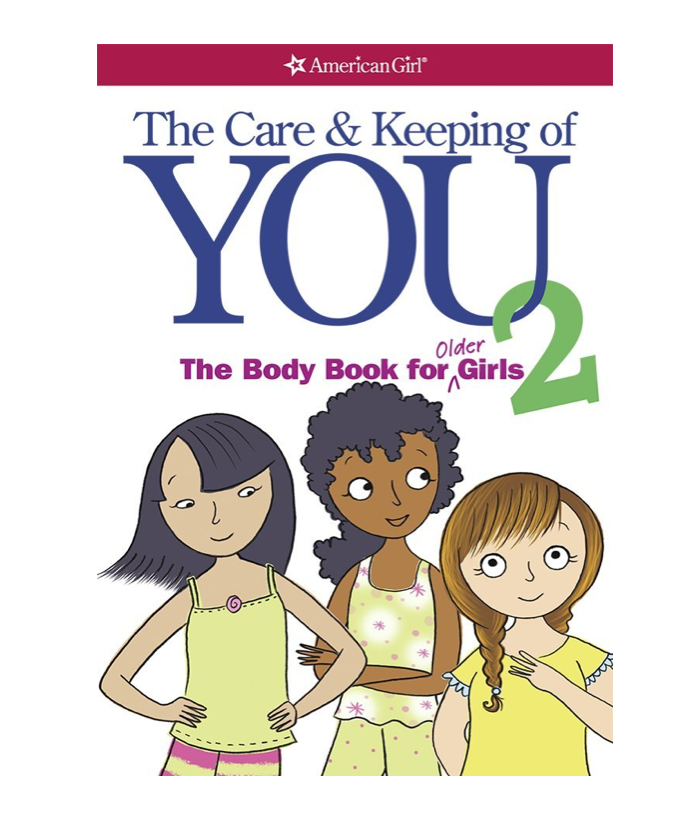
The Care & Keeping of You 2 by Dr. Cara Natterson is the follow-up to the popular The Care & Keeping of You and is chock-full of advice for your blooming tween. Whether she’s dealing with hormonal, emotional or physical changes, this book is a must-have for your daughter. We had a chance to ask the author some questions about the second book in this American Girl series for your older tween:
FPGirl: How does The Care & Keeping of You 2: The Body Book for Older Girls differ from the first book, and is it specific to an age group or geared more toward a particular maturity level?
Dr. Natterson: The Care and Keeping of You 2 (TCKY2) really picks up where TCKY1 leaves off. It covers some of the same material, but goes into much greater depth, answering the whys and hows of puberty. Unlike the first book, TCKY2 covers anatomy and biology and hormones, and it also discusses brain changes and emotional shifts in puberty. So all of the content is either new or much more detailed.
I think of these two titles as sequential: It’s best to read TCKY1 first, and then TCKY2. Of course, if a girl is older (say, 12 or even 11), she may jump right to #2 because the topics and the level of detail may appeal to her more. But there is no reason to skip book 1 entirely – I have lots of moms (and dads!) tell me that they learned lots of helpful facts from the original book. The appeal of each book really depends upon a girl’s maturity level – emotional and physical. That said, if you are looking for specific age guidelines, I would suggest that TCKY1 is for 8 – 10 year olds, and TCKY2 is for 10 and up.
FPGirl: What is the best way to approach the topics in the book with a shy daughter who wants nothing to do with these topics? Do you suggest tossing the book on her bed and walking out? How can you recommend letting a young girl know that Mom has been through all of this too?
Dr. Natterson: Some girls read the books with their moms and it is comfortable and easy. But this is not a shocker: Many girls don’t want to talk about all of the changes they are going through. In fact, this is a really common phenomenon. I think that the reluctance often comes from fear, and as girls start to become educated, they fear less. So here’s what I would suggest: Buy the book, read it yourself (so that you know what’s in there and you have some talking points ready when the time comes), and then give it to your daughter. If you have the daughter who wants to read it with you, then great – do that. But if not, give it to her and you don’t have to say much, just something like: “This is a book about all of the body changes that are about to happen (or that are happening) that is written for girls your age.” And if you are not sure whether she is reading it, be patient. You don’t need to remind her every few days – trust me she knows it’s there! In fact, the less you push, the more likely she is to open it up and start reading on her own. Moms tell me all the time that they find the book dog-eared and clearly read, even though their daughters deny it. That’s fine!
The next step is to gently bring up topics related to body or emotional changes. I suggest doing this somewhere that you don’t have to be looking into each others’ eyes, because it is an embarrassing topic and looking at each other adds to the vulnerability. So while you are driving and she is sitting in the back, or while you are on a walk and both of you are staring ahead, or while you are saying goodnight and having that five minutes of wind-down at the end of the day when the light are off – these are all great times to bring up a topic and try to open a little conversation.
Finally – and I can’t emphasize this enough – it is great to let her know you went through it too and she’s not alone, but do your best to make the conversations about her and not about you. And notice I said conversations, plural. That’s because this is not one talk. It is many talks over many years, and it’s never too late to start.
FPGirl: What, in particular, do you think are the toughest topics in the book for girls to understand or deal with – emotionally and physically?
Dr. Natterson: I think that watching your body change into a curvier and more adult version of itself is hard for most girls. Maintaining self-esteem while you experience a transformation that is largely out of your control is never easy. But every girl will have her own hurdle: Some will battle acne and others body odor; some will develop early and some will develop late. To each of these girls, her own issue is the worst part of puberty. The emotional changes during puberty are not to be underestimated, either. Girls – and their parents – tell me all that they don’t like how it feels to react emotionally. And I don’t just mean cry or yell – emotional outbursts can also be fits of uncontrollable laughter. For some girls, the body changes of puberty are no big deal but the emotional ups and downs are the biggest hurdle.
FPGirl: Will there be a third book?
Dr. Natterson: We’ll see!
****
You can order The Care & Keeping of YOU 2 The Body Book for Older Girls on Amazon. The Care & Keeping of You 1 The Body Book for Younger Girls can be purchased on Amazon.
About the Author:

Stephanie Elliot, in no particular order, is a wife, writer, blogger, book reviewer, editor and mother to three kids, two who have already been tweens, and one who is right smack in the middle of his tween-ness. Her oldest son is almost driving and her daughter survived her tween years so Stephanie must be doing something right. Find out more at stephanieelliot.com.
 Facebook
 Google+
 Pinterest
 Twitter
 YouTube